


The Dhaka Times Desk How could a cake 'printed' on a 3D printer taste? The trend of such 'printed' food is expected to increase in the future. Even different breads can be prepared for everyone according to their nutritional needs.
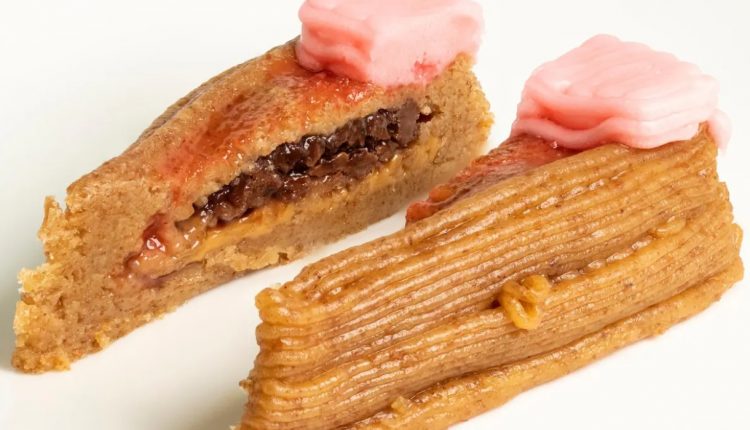
According to news media, various types of baked food are coming out from 3D printers. As a food technologist Tekla Alpers created this process. He is also researching how bread and other baked goods can be prepared without an oven, at the University of Munich. He also wants to create new types of baked food with the help of 3D printers.
An infrared heater also stabilizes certain materials for printing. It may look like a scene from a spacecraft landing on Mars, but it is actually possible to shape this material infinitely. Also many steps in the baking process can be eliminated. Tekla said, 'Dough is kneaded according to strict rules in the traditional process, given a certain shape and then bread or cake is baked. We can waive that obligation altogether. We can also create completely different structures and surfaces.'
It is also possible to create any design. It also has some other benefits. Martin Heckel, a food technologist, believes that 'exactly the same object is not possible in the baking process. There can also be differences in dough, air ratio, texture. Baker can certainly exercise some control as well. But not everything can be determined absolutely perfectly. With a 3D printer I can also make the distribution of 'pores' absolutely perfect. That's why it's possible to make exactly the same product every time.'
Bread of specific ingredients and proportions from the printer is still a dream of the future. While such processes are possible as an alternative, 3D printers are unlikely to replace traditional bakers. Source: Deutsche Welle.
>>>>>>>>>>>>>>
How to prevent dengue
Dengue is a mosquito-borne viral fever. This fever is different from other viral or bacterial fevers. However, this fever is not contagious in any way. This viral fever can occur alone or in combination with other viruses (chikungunya, yellow fever, Burma forest, flu, respiratory syncytial) and bacteria (pneumococcus).
Dengue fever is divided into two categories depending on the severity of symptoms and fever.
1. Common dengue fever
2. Dengue fever with bleeding.
In the case of common dengue fever, the following symptoms are mainly seen-
1. Sudden high fever lasting 2 to 7 days.
2. Severe headache.
3. Pain behind the eyes.
4. Along with the fever, red rash appears all over the body.
5. Severe pain in whole body as well as back pain.
6. Nausea or vomiting.
7. A rash or red bumps on the skin.
In case of dengue fever with bleeding:
1. Bleeding from nose, mouth or vomiting with high fever within 2 to 48 hours.
2. Fluid accumulation in chest or abdomen along with fever.
If any of these symptoms appear, seek medical attention immediately.
On the other hand
Wait at home for the first 3 days of fever. On the other hand, sponge the whole body with water every now and then. This will reduce the level of fever. Drink enough water and rest. After that, if the fever does not decrease or if it continues to increase after some time, consult a doctor immediately.
Things to do to prevent Dengue:
1. Try to keep the surroundings of the house as clean as possible.
2. If there are flower tubs or broken plastic bottles, can shells, tires or polythene inside the house, clean them quickly and drain the accumulated water from the flower tubs.
3. Spray or fog at least 3 times a week to kill mosquitoes.
4. You can keep mosquito repellent cream with you while going out.
5. After evening, younger and older members of the household should use mosquito nets.
6. Clean up any accumulated rain water, as this is the time when Aedes mosquitoes lay their eggs.
7. On the other hand, you can use mats along with mosquito nets to avoid mosquito infestation.
8. Since Aedes mosquitoes bite during the day, it is important to avoid sleeping with mosquito nets while sleeping during the day. Source: https://dmpnews.org

 English
  Bengali