


The Dhaka Times Desk a skeleton He has Kii or Mojeja. However, the unknown chapter of the sepoy rebellion came out of that little skeleton! It sounds amazing.
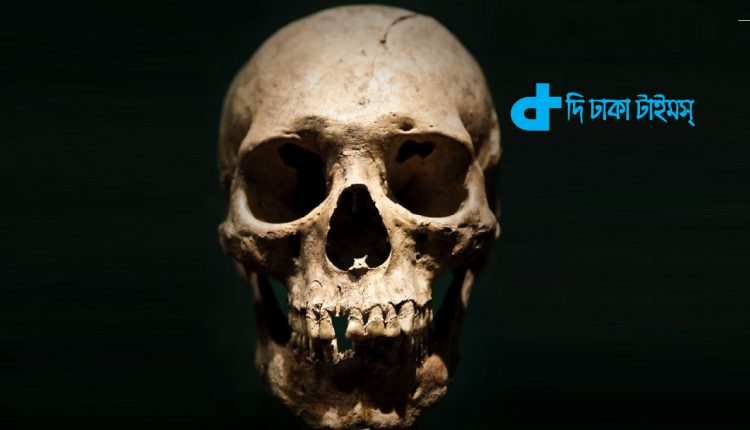
Historian Kim Wagner received an email while working in her office in London's Mile End in 2014. In the email a couple wrote that they had a skeleton skull. They don't want to keep it in their house. But don't understand what they should actually do.
But the rest of that skeleton is missing. A few teeth have already erupted. But the most important thing is the paper with it. There is a note on the identity of this skull.
That skull belongs to Habildar Alam Beg. A soldier of the 46 Bengal North Infantry Regiment, he was killed in a gunfight with several others of his regiment. He was one of the main leaders of the Sepoy Mutiny of 1857.
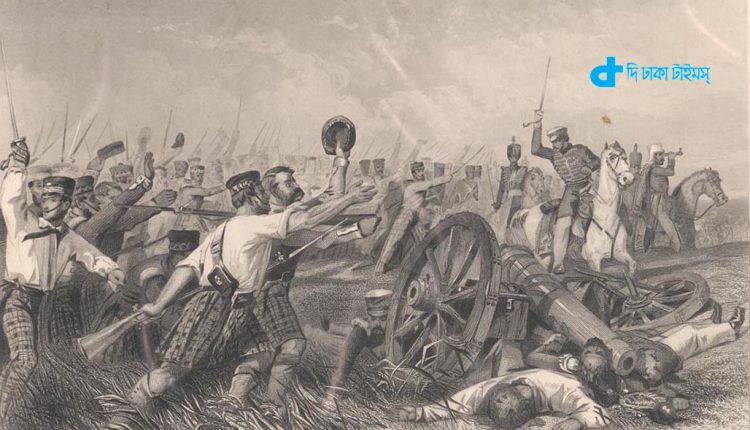
It is learned that Habildar Alam Beg with a small party occupied the road leading to the fort, from which the Europeans were trying to get to safety. He ambushed the horse carriage in front of the daughter. Graham was killed. His next victim was Reverend Hunter, a missionary, who was on the run with his wife and daughter. Dr. After killing Hunter, he also tortured and slaughtered his wife and daughter.
Alam Beg was only 32, 5 feet 7.5 inches tall and by no means looked like a local. The skull was brought home by Captain (AR) Costello, who was present at the execution of Alam Beg.
What is clear from this note is that this skull belongs to an Indian rebel soldier named Alam Beg, who served in the Bengal Regiment and was executed by cannon in the Punjab in 1858. Whoever wrote this note brought the skull to England. But the question is why the note does not say anything about the murder that Alam Beg committed.
According to a media report, using animal fat in cartridges would be anti-religious, which is why local Hindu and Muslim soldiers rebelled against the British East India Company in 1857. Before and after that, the British ruled India for about 200 years.
The couple did a lot of searching on the Internet for Alam Beg to find out about the skeleton. But after finding nothing there, he finally resorted to this professor.
Professor Wagner then met the couple in November. They said that they came into possession of this skeleton through a family heirloom.
On how he got the skeleton, a relative bought a small pub in Kent. Then find this skull in an old box petra in a room there. No one knew how the skull came to be. For some time it was arranged for the people of the pub to see. After the owner of that shop died, the skull passed through various hands and came into the hands of this couple.
Then Dr. started to find out the past of that skull. Wagner. First of all he must be sure whether the skull really has any historical connection or not. That's why he turned to the Natural History Museum in London. After examination, an expert opined that it was the skull of a young Asian man from the mid-nineteenth century. Who may be in his early thirties.
However, there is no way to tell how he died from the skeletal skull. Moreover, it is not uncommon to die from cannon fire.
Dr. Wagner did not expect that he would find out anything about this man so soon. Because usually there is never much documentation about small armies.
No search has been made in British or Indian archives for Beg's name or any papers, reports, letters or memoirs.
But Dr. found some sources here. Wagner. It is said that Alam Beg killed some letters from their families. Wagner. There is a person named Andrew Gordon, who died Dr. Graham knew Hunter and was present at Begg's execution.
Dr. started searching for the information found. Wagner. He started searching the archives of London and Delhi. At a distance of four days from Sialkot in present-day Pakistan, he also located the battlefield 150 years ago, where Alam Beg lost his battle with the British.
By going through the books, letters, petitions, statements of that revolt, Dr. can finally reach this conclusion about Alam Beg. Wagner. He is also writing a book named 'Alam Beg Khuli' on that description.
Actually his real name is Alim Beg, who was a Sunni Muslim from North India. The Bengal Regiment was formed at Kanpur in present day Uttar Pradesh. Alim Beg is also believed to have come from that area. He was in charge of a small army team. Basically, their job was to guard the camp, carry letters, and carry out fur formayes as pressure on the superior officers.
But the person who brought the skull to Britain has also been identified as Captain Robert George Costello. Born in Ireland and came to India in 1957 with the East India Company. He retired after 10 months.
Dr. "The ultimate goal of my research is to bring Aleem Beg back to India, if that's possible," says Wagner.
So far there have been no claims for this skull. However, Dr. has been in contact with various institutions in India and the British High Commission in India. Wagner.
Dr. Wagner said, "I don't want this skull of Alim Beg to be a political issue or adorn a glass case in a museum, or lie in a box." I want Alim Beg to go back to his country and lie in his soil with honor.
Dr. Wagner believes that Alim Beg's grave should be on the small island in the middle of the Ravi River, where he and his army took refuge after losing the battle with the British. Now that island is the border area of India and Pakistan. Therefore, Dr. Alim Beg thinks that there is still some left to write the final chapter. Wagner.

 English
  Bengali