


The Dhaka Times Desk Almost 6 weeks of marathon elections in India, the world's largest democracy, ended on Saturday (June 1). Voting in 57 Lok Sabha constituencies in 8 states was completed yesterday (Saturday) in the last phase of 7-phase polling that started from April 19.
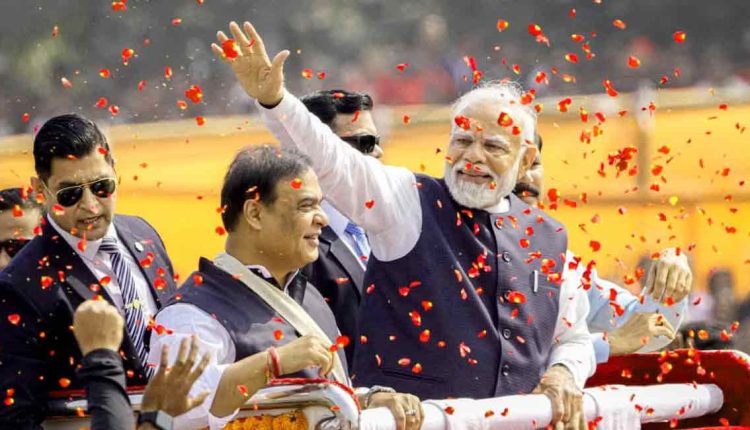
In the last phase of the election, there were isolated incidents of violence and vandalism of EVM machines in some areas of West Bengal. The National Election Commission of India will officially announce the final results of the elections on June 4.
According to the Indian constitution, a party or coalition must win at least 272 of the 543 Lok Sabha seats to form a government. This year's Lok Sabha elections saw intense competition between two major alliances. One of the country's ruling parties is the Bharatiya Janata Party (BJP)-led National Democratic Alliance (NDA) and the other is the Congress-led India Alliance. Prime Minister Narendra Modi's NDA alliance is desperate for a third consecutive term in power. On the other hand, the Congress-led India Alliance is also hoping for a landslide victory in the elections.
Gokkal Saturday (June 1) Shortly after polling ended, the results of booth return polls began to be published in the country's press as usual. Although the results of these surveys are sometimes seen to be opposite. Earlier, NDA alliance won 353 seats in 2019 elections.
At least 4 media booths in the country released the results of the polls in the evening. It said that Narendra Modi's BJP-led NDA alliance is set to win more than 350 Lok Sabha seats. Through which Narendra Modi is going to come to power for the third time in a row.
National media outlet NDT released the first booth return poll results, saying that the NDA alliance led by Prime Minister Narendra Modi's Bharatiya Janata Party is expected to win a majority in this general election. According to the results of the booth return polls of the country's 4 media and organizations, the ruling NDA alliance is likely to win more than 350 seats in the 543-seat Lok Sabha. Where 272 seats are required for a simple majority.
Booth return polls by India News and D-Dynamics suggest that the NDA alliance is likely to win 371 seats and the India Alliance 125 seats in the Lok Sabha elections. Also Congress-led India Alliance is likely to win 125 seats.
According to the results of the booth return polls by Republic Bharat and Matriz, another media outlet of the country, the BJP-led NDA alliance is likely to win 353 to 368 seats. In addition, the coalition of opposition parties in the country India may win 133 seats from 118. Other parties are also expected to win 43 to 48 seats.
Booth return polls by Republic TV and PMARQ, another media outlet in India, suggest that the NDA alliance could win 359 seats and the India Alliance 154 seats. 30 seats can be captured by other parties.
As a result of Jan Ki Baat's booth return poll, it is said that the NDA alliance is going to win 392 seats out of 362 and the India alliance is going to win 161 seats out of 141.
NDTV says that the BJP-led NDA alliance can win 365 seats, India Alliance 142 seats and others can win 36 seats in this election.
If the outcome is the same, a possible victory for Modi, 73, would put him in power for a third consecutive term as the country's second prime minister after Jawaharlal Nehru, the influential leader of India's independence movement.
>>>>>>>>>>>>>>
How to prevent dengue
Dengue is a mosquito-borne viral fever. This fever is different from other viral or bacterial fevers. However, this fever is not contagious in any way. This viral fever can occur alone or in combination with other viruses (chikungunya, yellow fever, Burma forest, flu, respiratory syncytial) and bacteria (pneumococcus).
Dengue fever is divided into two categories depending on the severity of symptoms and fever.
1. Common dengue fever
2. Dengue fever with bleeding.
In the case of common dengue fever, the following symptoms are mainly seen-
1. Sudden high fever lasting 2 to 7 days.
2. Severe headache.
3. Pain behind the eyes.
4. Along with the fever, red rash appears all over the body.
5. Severe pain in whole body as well as back pain.
6. Nausea or vomiting.
7. A rash or red bumps on the skin.
In case of dengue fever with bleeding:
1. Bleeding from nose, mouth or vomiting with high fever within 2 to 48 hours.
2. Fluid accumulation in chest or abdomen along with fever.
If any of these symptoms appear, seek medical attention immediately.
On the other hand
Wait at home for the first 3 days of fever. On the other hand, sponge the whole body with water every now and then. This will reduce the level of fever. Drink enough water and rest. After that, if the fever does not decrease or if it continues to increase after some time, consult a doctor immediately.
Things to do to prevent Dengue:
1. Try to keep the surroundings of the house as clean as possible.
2. If there are flower tubs or broken plastic bottles, can shells, tires or polythene inside the house, clean them quickly and drain the accumulated water from the flower tubs.
3. Spray or fog at least 3 times a week to kill mosquitoes.
4. You can keep mosquito repellent cream with you while going out.
5. After evening, younger and older members of the household should use mosquito nets.
6. Clean up any accumulated rain water, as this is the time when Aedes mosquitoes lay their eggs.
7. On the other hand, you can use mats along with mosquito nets to avoid mosquito infestation.
8. Since Aedes mosquitoes bite during the day, it is important to avoid sleeping with mosquito nets while sleeping during the day. Source: https://dmpnews.org

 English
  Bengali