


The Dhaka Times Desk Clocks and time-measuring devices as advanced as in the modern era certainly did not exist in the early days of human civilization. But the value of time was the same then as it is now. And that's why the people of that era made their own calendar to keep track of days. Recently, a similar calendar was found in Serbia.
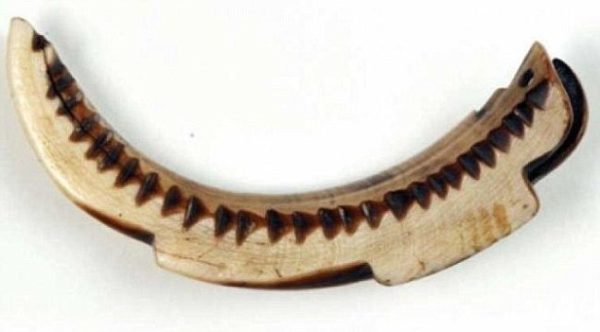
This calendar, found in Smederevska in eastern Serbia, is at least 8,000 years old. The place where it was discovered, is particularly known for its legacy of Neolithic civilization. Apart from this, various signs of ancient religious beliefs are also found in this area. Neolithic people are considered to be the ancestors of human civilization who started farming and animal husbandry. Apart from this, alphabets, making clay pottery, cloth weaving also start at this stage.
This banana-looking calendar has a total of 28 divisions, which help to keep track of the different phases of the moon. The calendar is made from wild boar's teeth. Certain days and weather conditions are closely related to agriculture. Archaeologists believe that this calendar was developed by primitive people to calculate the best day to sow crops from the position of the moon. Archaeologists also say that this calendar can easily be packed in a small leather bag. As such, it can be called the world's first pocket calendar.
A few days ago, archaeologists from the University of Birmingham dug up soil in Scotland and found a calendar that they claim is 10,000 years old.
References: The TechJournal

 English
  Bengali