


The Dhaka Times Desk In Singapore, better known as a modern city-state, farming is basically impossible due to lack of space. But what happened to it? This time, fish farming will be in the 8-story building in Singapore!
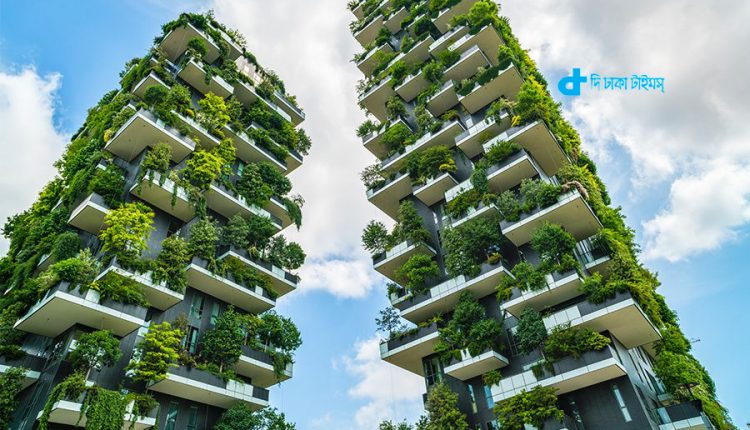
The country's government is choosing various innovative ways to reduce dependence on imports. The matter is being given extra importance especially during the corona epidemic.
One can get an idea of the future of the country by going up to the 32nd floor of a high-rise building in Singapore. Maya Hari is also planting watermelon and cauliflower seeds there. He is growing chillies, brinjals and bananas in the rooftop garden. The working man in the field of technology is quite ahead of many.
Singapore's government wants to fill the hi-tech city-state with allotment gardens if it can. In this regard, Maya Hari said, "Though there is no season here, one can try to grow tropical fruits and vegetables." However, most people in Singapore live in flats. Farming there is, in short, difficult. That's why the work is not very easy.
The government is not only encouraging the cultivation of vegetables at home by making videos. About one and a half lakh 'starter kits' are being sent to people like Maya with various goods and spices including seeds. Initiatives are also being taken to make citizens part of an overall plan.
So far, Singapore produces only 10 percent of its food to meet its own needs. The country's government wants to bring that level to 30 percent by 2030. According to Maya Hari, more self-reliance is the right strategy, as the Corona pandemic has shown everyone. Singaporeans are benefiting from a greater interest in local food ingredients.
Maya Hari, a hobby gardener, said, “The entire country and its citizens are being encouraged to increase production by adopting many technologies and adopting modern methods of growing trees. Just growing vegetables on the balcony will not achieve that goal, but it is a start.''
Singapore can never be thought of as an agricultural state. Known as a financial and economic center for many decades, the country is full of high-rise buildings. Despite the greenery, farming seemed like an activity of a bygone era. But Singaporeans are now looking to reduce their dependence on other countries. As there is a lack of space, preparations are being made to build a vegetable garden on the roof. The benefits of this new strategy are already being realized.
After quitting his job in advertising, Bjorn Low has been growing papaya, rosemary and passion fruit on the roof of a popular shopping mall since 2015. People laughed at that time, but now he is in demand as an expert.
This entrepreneur has already created around 200 such gardens across the city. He is experimenting with new technology inside shipping containers. For example, it is not possible to grow kale or kale in tropical climates. But here, this vegetable is being grown very easily at several levels with the benefit of LED light as an alternative to nutrient solution and sun. Due to such a positive trend, competition with neighboring country Malaysia may be possible. There is much less money spent on food production.
Björn Low believes that this is possible because there are more nutrients in the vegetables he grows. "It is also much better for the health of the consumers," he added. That's why we can charge an extra 20 or 30 cents for our vegetables. In this way, perhaps we can get an additional advantage in terms of competition.''
Meanwhile, only one percent of the land in Singapore is considered suitable for conventional farming. That is why multi-storied farms are being built all around with the support of the government. An 8-storey building will also house fish farming in the near future. A company called Apollo Marine has already developed that concept. Until now, the company has been producing 300 tonnes of fish a year in a building across the street. This time the country's government has also joined the initiative as an investor.
In the future, the company plans to farm 10 times more exhausting trout fish in Chaubachcha. According to Apollo, farming will be done in a sustainable manner in an ecological perspective. 90 percent of water can be recycled here. Apollo gets many Singaporeans as new customers due to the tight supply of fresh fish from overseas during the lockdown.
Chrono Lee of Apollo Marine Company told the media, "During the breeding of fish, there were various pollution problems in the coast. Pollution can be seen in rain, microplastics, oil floating in the ocean. Breeding in a system like ours has no such pollution problem.''
Things to do to prevent Corona virus
# stay at home all the time.
# Follow the rules and use mask when going out for emergency.
# three-layer surgical mask can be washed if desired.
# wash clothes after coming home from outside. Or hang it without shaking for at least four hours.
# Wash hands thoroughly (for at least 20 seconds) with soap or liquid before coming outside.
# plastic PPE or eyes, mouth, head after single use
Of course it can be washed thoroughly with detergent and dried.
# Wear PPE made of cloth or clean as described.
# Use a head cap that completely covers the hair.
# Those who have sneeze cough should follow all the rules promulgated by the government. Also, wash hands as directed before and after handling food items, keys, switches, mice, remote controls, mobiles, watches, computer desks, TVs, etc. and after using the bathroom. Those who have dry hands use Moisture after washing their hands. Soap or hand liquid can be used. Why can this virus remain in the crackle (cracked part) of dry hands? Avoid using highly alkaline soaps or detergents.

 English
  Bengali