


The Dhaka Times Desk Like every week, today we will bring you interesting news from around the world - hope you like it.
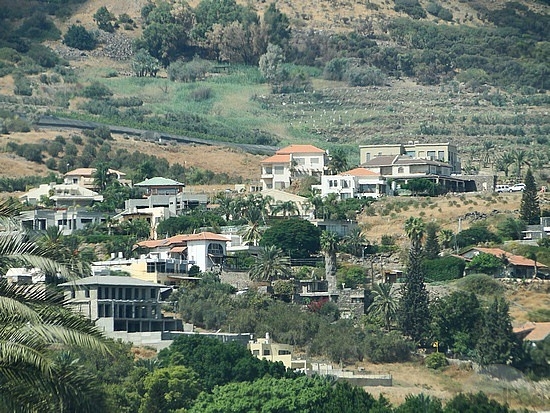
Jericho city walls and monastery
The city of Jericho, located on the banks of the Jordan River, is mentioned in the Bible in the 'Old Testament'. There the city is referred to as the 'city of palm trees'. If the world's oldest cities are counted, Jericho will easily be among them. That ancient imprint is present in the tree-lined streets of Jericho. But the city of Jericho features shelving elsewhere. Archaeological excavations have revealed that there was an ancient wall around the city of Jericho, which dates back to 8,000 BC. The city was under Jordanian rule from 1948 to 1967. Israelis occupied this city since 1967. There is another exciting story behind it, which is described in the Old Testament. The description goes like this - The Israelites reached this place after much wandering. The city was surrounded by a wall. The Israelites circumambulated the wall for six consecutive days. On the seventh day they circled the city a total of seven times. The seventh time the priests blew the trumpets, everyone shouted and the city wall fell. Then the Israelis attacked and set fire to the city. After several archaeological expeditions, the remains of the wall were found and no one raised any doubts about it. So is it true that the wall of the city fell? When Jericho goes, this question seems to enter his mind without knowing. A monastery has always kept an eye on the city of Jericho! The 'Monastery of Temptation', perched on a hill outside Jericho, appears from a distance to be a thin ribbon of steep rock. The city walls of Jericho are no more. But the monastery watches over the city from afar.
A cave like a human face
A Normund-shaped cave has been discovered in the UK. There is almost an uproar about this cave. UK's 'Hodge's Close Quarry' mountain cave is known as sinister and deadly. People have many questions about this cave. Everyone's question is what is actually in this cave. It has been found that the cave is actually submerged. It is located in the rugged mountains of the Coniston administrative area in the Cumbria region of the country. What is even more terrifying is that many divers have lost their lives trying to uncover the secrets of this cave. A few days ago an adventurous photographer and diver took pictures of Narmund Cave. Despite facing various dangers just to take pictures, he did not return until the end and took pictures of the cave. They themselves are shocked after seeing the pictures taken of themselves. Seen in the picture, the mouth of the cave in the shape of Normund came up. The water in the cave is as cold as ice, with a temperature of 6 degrees Celsius. Its length is 25 meters and the area of the spherical cavity is two square meters.
Every year divers risk their lives to uncover the secrets of this cave. The news of the death of many divers while conducting expeditions in this cave is sometimes heard. Last year also three divers died in this cave. Even so, the addiction to uncovering the mystery did not leave them. That is why it is known as a haunted and haunted place by local people. Divers who have not received proper training are prohibited from entering these dangerous caves as a hobby. Many believe that three divers died last year because of poor training.
There is a legend that a diver may have lost consciousness in 2005 after witnessing a human-like object underwater in the cave. At that time, members of the Coniston Mountain Rescue Team came forward to retrieve the unconscious diver from the water. They tried hard to rescue the diver from the water in a sick condition. Not only that, the photographer Peter Beardsley is said to have photographed the cave by pointing the camera at a 90 degree angle. After finishing the work of the film in the studio, he was surprised to see the film. Because the picture looks exactly like Normund. The photographer commented, "I feel like I'm watching a still from an Indiana Jones movie." No manipulation was done while taking the picture. At a glance, this cave in the shape of Normund reminds of giants. Many may be shocked.
Evening stars in the distant sky
Mercury was discovered in the 3rd millennium BC. As can be seen from the earliest records, the Babylonians made detailed inquiries about this planet. They called it Gu-Utu. The ancient Greeks gave it two names. It was called Apollo when seen in the eastern sky and Hermes when seen in the evening sky. Again, Heraclitus thought that Mercury and Venus revolved around the Sun, not the Earth. The exploration of Mercury is a difficult task. Because it is very close to the sun. As a result, it is visible from Earth only at sunrise and after sunset. In astrology, Mercury is described as the counterpart of the Roman god Hermes. Hermes was the messenger of the other gods and hence Mercury is usually depicted with winged slippers. Mercury carried messages and was believed to be the protector of traders and travelers. A person with Mercury will feel surprisingly light in weight. Mercury is much smaller than the Sun, so it has less gravitational pull. For example, if someone weighs 70 pounds on Earth, it would be 27 pounds on Mercury. Mercury is the closest planet to the Sun. As a result people of the world can see it at night. Mercury is usually bright in the early morning just before sunrise. Mercury is also called the evening star as it appears shortly after sunset.
Mercury is rich in iron. It is actually a large iron ball covered with a thin silicate coating. As Mercury's iron cools, its rocky mantle shrinks. Scientists call this curled condition Lobate scarpes. Mercury's exterior has numerous craters formed by collisions with asteroids and comets. Any planet in the solar system is prone to such damage. Many planets have natural mechanisms for healing such wounds. But Mercury is a dead planet and has no way to heal because it doesn't have a full atmosphere and volcanoes. Mercury doesn't have a full atmosphere, and because of its small size, its gravity is low. As a result, any gas produced is lost to space. Because Mercury's atmosphere is thin, gas molecules collide with Mercury's mantle and with each other. As a result, it appears to have no atmosphere. Mercury's atmosphere is constantly being lost to space. The average lifetime of potassium and sodium molecules is 3 Mercury hours. Mercury has a relatively strong magnetic field. This magnetic field is probably caused by the rotation of a metal molecule moving like the Earth's interior. Researchers have found that Mercury's interior is not hot enough to melt nickel-iron. But a low melting point substance like sulfur acts as a catalyst in this case. The average surface temperature of Mercury is 452 Kelvin, which varies from 90 to 700 Kelvin. The intensity of sunlight on the surface of Mercury is 6.3 times that of Earth and its brightness is 3566 W/m2. Mercury's orbit is highly eccentric with a radius of 40 to 70 million kilometers. The presence of some water and ice at the north pole of Mercury can be observed through telescopes. Such water, deposited by cometary impacts, is likely to remain at the bottom of the crater at all times.
City on the water!
The name of the city is Venice. The houses are standing right on the water. To go from one house to another one has to take a boat or a gondola. Venice's waterways are the streets. Larger steamers for distant places travel through canals. The canals are also quite wide. During the rains, water sometimes rises up to the doors of the houses here. However, this condition remains throughout the year except for one or two months of the year. There are big wooden poles in front of all houses for tying boats or gondolas. People who drive boats are usually swindlers. They also sing while driving the boat. But the interesting thing is that there are paved roads inside the city of Venice. Just as it is easy to get from one place to another by water, there are many by land 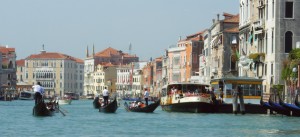 have to go around The distance also increases several times. Like the buses of our country, steamers travel through all major canals. There is no particular difficulty. There is no other city standing on such water in the world. This is a surprising thing. Venice is a very old city. This city has been associated with the history of Italy for ages. At first, large houses were built side by side or a little far apart with brick-stone-wood. Then the canal was cut and the sea water was introduced. They have now become waterways. The San Marco area is dotted with hotels. The main attractions of Venice are the church of San Marco, the Cambanil and the nearby Doge's Palace. The square in front of the church is quite big. A few similar houses around. Shops on one floor of each multi-storied house. At one end of the square is the church. From a distance, it looks like a jewelry box. Made entirely of stone and glass. Mosaic inside and outside. It will look similar to Byzantine architecture. The church is dedicated to San Marco. Thousands of tourists have come here like pilgrims for ages. Those who come here sit on the boat and listen to the music of the driver. There are many pigeons here. They are not afraid of people. Trying to pick up hand food. It is a beautiful sight. Almost every house here is a massive quadrangular building built of campanile brick. The sea is next to it and St George's Island is clearly visible in the distance. The largest canal is called the Grand Canal. The Grand Canal or wide canal meets the sea. There is a very wide, beautiful marble church standing on the water in the distance. Named 'Maria di la Salute', the Doge's Palace between the church of San Marco and the Campanile. The Doge ruled Venice. Sometimes they conquered northern Italy and ruled over large areas. The Doge sat in the middle of a large hall and ruled the country. Dose's house is now Chitrashala. Lord Byron's house is also in Venice. Every boatman here knows Lord Byron's name.
The hand of the death cave
Many people may have heard of man-eating trees, fish, ghosts, etc. but have you ever heard of man-eating caves? Yes, it sounds like unbelief. But surprisingly it is true. We have one such cave in this world known as Manukheko or Death Cave. In the cave we are talking about, not only humans, but any creature that enters it cannot come out alive. According to the Greek geographer Strabo, there was a temple to the god Apollo in the ancient Greek city of Harapolis. It was once known as a mysterious temple for various reasons. There was a cave next to this temple. The feature of this cave was that if any animal was thrown inside the cave, it would not come back. Even if a man went a little beyond the entrance of that cave, he would not return. But surprisingly, the priests could enter and exit the cave safely. But when they returned, their faces were swollen and bloody. The citizens of ancient Greece believed that the cave was the passage to the afterlife and that evil gods reigned there. When ordinary people or animals go there, the demigods kill them and when the gods go there, they are able to fight the demigods with their divine powers and return victorious. Strabo wrote these facts in his book 2000 years ago. People of the present age do not believe in ghosts, ghosts or deities. Science has no reality to it. So it is natural to raise the question to the common people, then was there something that caused any person or creature to enter that cave and not come back? Humans have had an interest in knowing the unknown since ancient times. That interest has not decreased in the present era but has increased. Professor Shelden of New York College in America published the most reliable new information on this subject based on Strabo's statue. He said that carbon-dioxide gas was emitted naturally from under that cave. If any human or animal enters the cave, it would die of suffocation due to carbon dioxide gas. The revelation of Shelden's new information may raise questions in the minds of many, but why would the priests not have died when they entered? He was also answered by Sheldon. He said, the priests knew this beforehand, so they used to suffocate inside the cave and come out and spread the glory of their power and authority. That is why when they came out, their faces were swollen and bloody from the pressure of the gas.
This ancient city is located in what is now western Turkey. Investigated there, it was found that there is a lot of tropical forests. It contains high amount of calcium carbonate. It reacts with acid to produce a lot of carbon dioxide gas. Steam and carbon-dioxide seep into the cave through cracks. As a result, only a few steps inside the cave is certain death. The mysterious cave of Apollo's temple still exists today. A few years ago, a group of Australian students went inside the cave to investigate. But they were really unlucky. They never came back. Since then, the Turkish government has placed an iron sheet over the mouth of the cave. So that no one else can enter. How many more such secrets are hidden in the history of the cave. The more you know, the more you are surprised.

 English
  Bengali